Call Us Enquire Now
Enquire Now

Enquire Now

×
Agilent BioTek Multimode Readers

Agilent BioTek Multimode Readers

Agilent BioTek multimode microplate readers bring multiple detection modes together in a single, upgradable instrument — UV-Vis absorbance, fluorescence, and luminescence, with cell imaging available on select models. Proprietary Hybrid Technology combines the sensitivity of filter-based optics with the flexibility of monochromators, so one system can adapt as laboratory workflows evolve.


5
Reader models
3
Detection modes (UV-Vis, fluorescence, luminescence)
200–999 nm
Wavelength range
70°C
Max incubation temperature


Authorized Channel Partner

Authorized Channel Partner

Agilent in India

Industry Experience

Industry Experience

30+ Years Enabling Indian Labs

Pan-India Support

Pan-India Support

Installation, Training, Application & Service Support Across India

Trusted by Leading Labs

Trusted by Leading Labs

Supporting India’s leading research, academic & biopharma institutions


Understanding the BioTek Multimode Reader Range

Agilent BioTek multimode microplate readers bring multiple detection modes together in a single, upgradable instrument - UV-Vis absorbance, fluorescence, and luminescence, with cell imaging available on select models. Proprietary Hybrid Technology combines the sensitivity of filter-based optics with the flexibility of monochromators, so one system can adapt as laboratory workflows evolve.
ELISA Workflows

ELISA Workflows

Immunoassays

Immunoassays

Cell-Based Assays

Cell-Based Assays

Clinical Diagnostics

Clinical Diagnostics

Research Automation

Research Automation


MULTIMODE DETECTION

BioTek Synergy LX Multimode Reader

A versatile multimode microplate reader combining UV-Vis absorbance, fluorescence, and luminescence detection in one compact system for routine research and assay development.


  • Combines UV-Vis absorbance, fluorescence, and luminescence detection in a single instrument.
  • Continuous wavelength selection from 200–999 nm for flexible assay development.
  • High-blocking optical filters with dichroic mirrors deliver sensitive fluorescence and luminescence measurements.
  • Supports nucleic acid and protein quantification, ELISA, BCA, Bradford, gene expression, and cell viability assays.
  • Optional Take3™ Microvolume Plate enables DNA, RNA, and protein quantification from 2 µL samples (16 or 48 samples per run).
  • Optional touchscreen interface allows standalone operation with immediate data display.
  • Compatible with Agilent BioTek Gen5 Software for assay setup, data acquisition, analysis, and customizable workflows.
Best For
  • ELISA assays
  • DNA & RNA quantification
  • Protein assays
  • Cell viability studies
  • Gene expression analysis
  • Routine multimode detection

An ideal entry-level multimode reader delivering flexible detection modes and simplified workflows for routine laboratory applications.
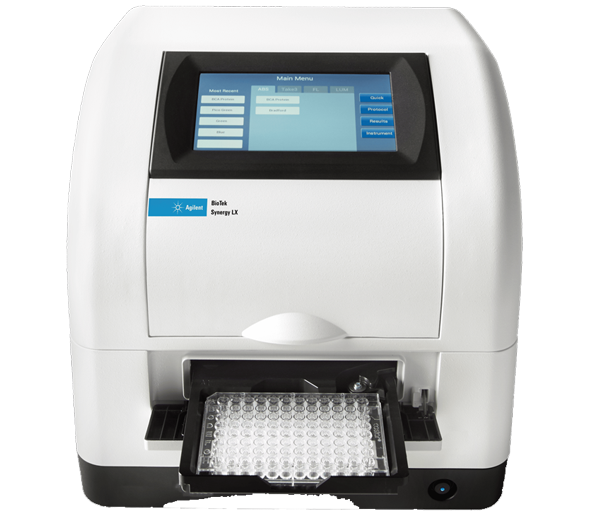
BioTek Synergy LX Multimode Reader

MODULAR MULTIMODE DETECTION

BioTek Synergy H1 Multimode Reader

A modular hybrid multimode reader combining monochromator and filter-based optics to deliver exceptional sensitivity, flexibility, and upgradeability for evolving research applications.


  • Hybrid optical design combines monochromator and filter-based detection for absorbance, fluorescence, and luminescence assays.
  • Variable bandwidth monochromators (9–50 nm in 1 nm increments) optimise assay sensitivity and specificity.
  • Automated Z-focus ensures accurate fluorescence measurements across multiple plate types.
  • Wide 7-log dynamic range supports both low- and high-intensity signal detection.
  • Temperature control up to 70°C with orbital shaking for live-cell and kinetic assays.
  • Expandable platform with optional dual reagent injectors, CO₂/O₂ environmental control, and additional detection modes.
  • Controlled through Agilent BioTek Gen5 Software for advanced assay programming and data analysis.
Best For
  • Cell-based assays
  • Live-cell research
  • Fluorescence applications
  • Enzyme kinetics
  • Drug discovery
  • Assay development

Its modular architecture allows laboratories to expand capabilities as research requirements evolve.
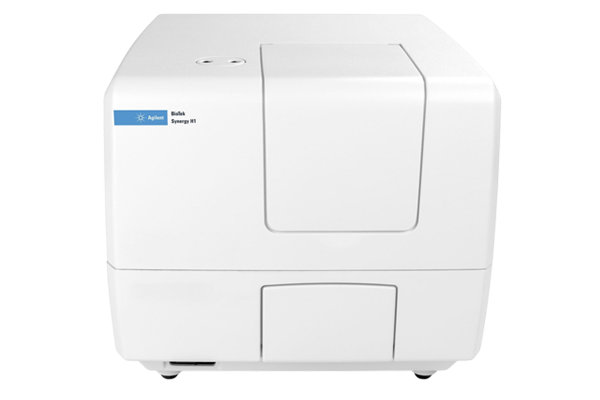
BioTek Synergy H1 Multimode Reader

HIGH-PERFORMANCE HYBRID DETECTION

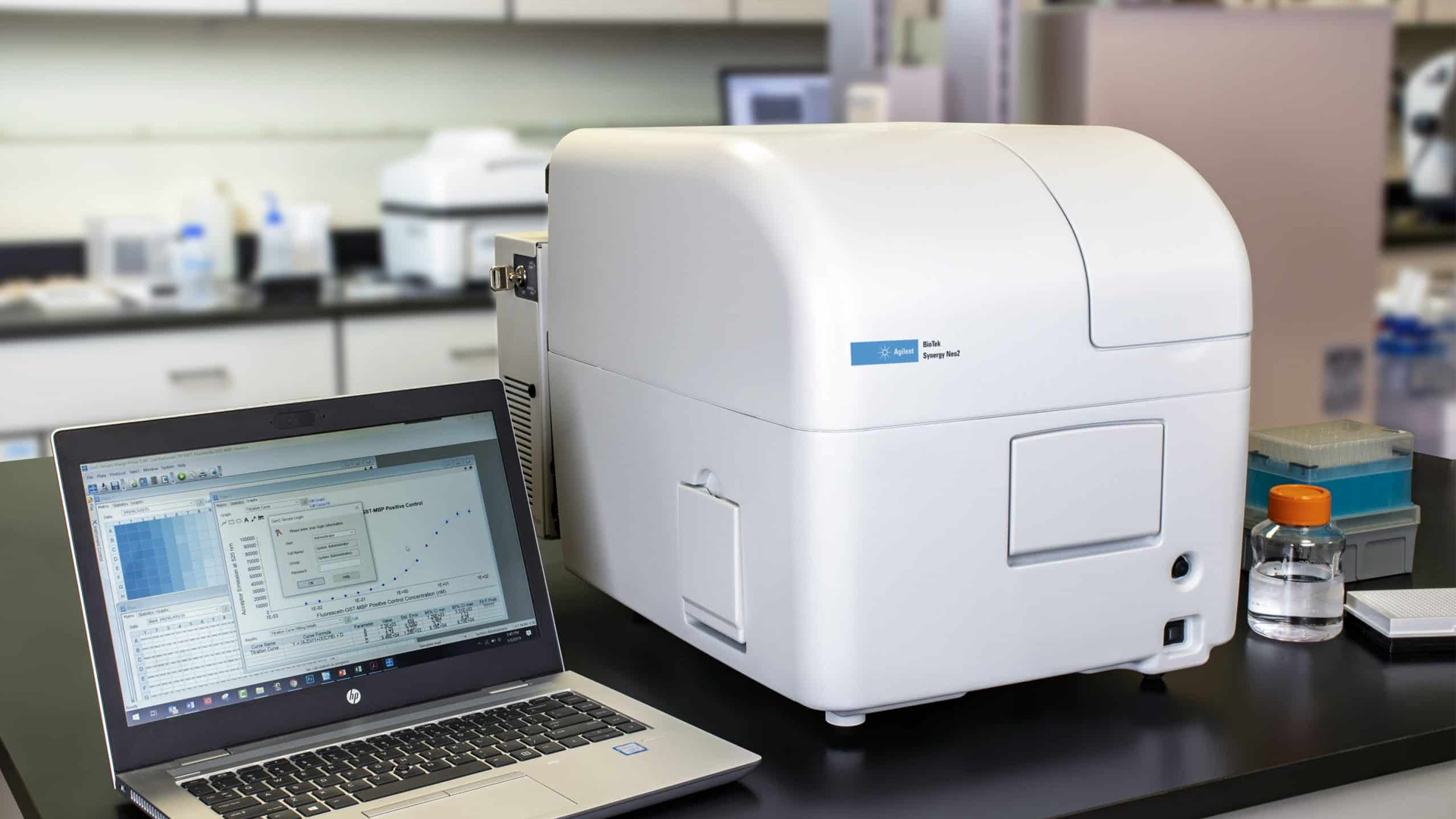
BioTek Synergy Neo2 Hybrid Multimode Reader

A premium hybrid multimode reader engineered for maximum speed, sensitivity, and flexibility, featuring independent optical paths for superior performance across advanced detection technologies.


  • Patented Hybrid Technology™ combines quad monochromators with high-transmission filter optics.
  • Dual PMTs enable simultaneous measurements for FP, FRET, TR-FRET, BRET, and other ratiometric assays.
  • Supports advanced fluorescence, luminescence, UV-Vis absorbance, Alpha, and TRF applications.
  • Integrated 100 mW Alpha Laser and 337 nm TRF Laser provide exceptional sensitivity and rapid assay performance.
  • Up to four PMTs deliver ultra-fast data acquisition for demanding screening workflows.
  • Environmental control with CO₂/O₂ regulation, incubation up to 70°C, and programmable shaking supports live-cell experiments.
  • Compatible with BioStack Neo for fully automated, walk-away microplate processing.
  • Comprehensive assay control and data analysis through Agilent BioTek Gen5 Software.
Best For
  • High-throughput screening
  • TR-FRET & FRET assays
  • Alpha assays
  • Drug discovery
  • Live-cell assays
  • Advanced fluorescence applications

Designed for laboratories requiring maximum performance, automation, and sensitivity across complex multimode applications.
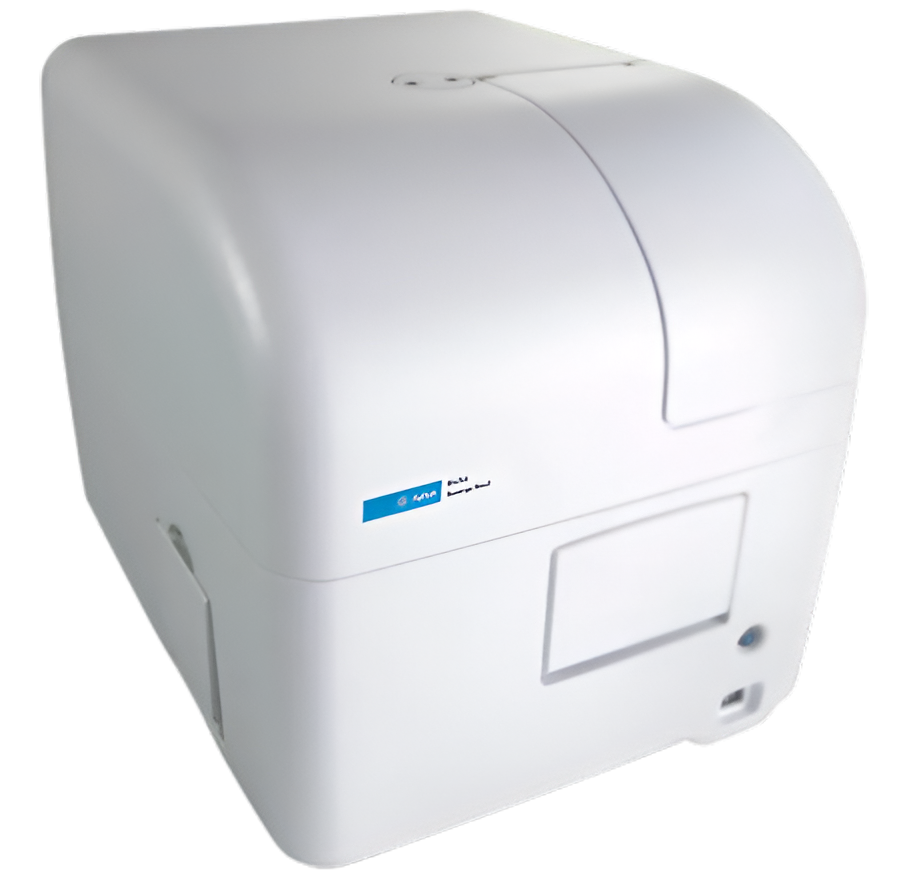
BioTek Synergy Neo2 Hybrid Multimode Reader

MULTIMODE DETECTION & IMAGING

BioTek Cytation Hybrid Multimode Reader

A modular research platform that combines multimode microplate detection with advanced digital microscopy, enabling seamless transition from quantitative measurements to high-content cellular imaging.


  • Combines UV-Vis absorbance, fluorescence, luminescence, and digital microscopy in one integrated system.
  • Optional fluorescence microscopy with objectives up to 60× for fixed and live-cell imaging.
  • Hybrid optical design combines high-performance filter optics with variable-bandwidth monochromators (9–50 nm).
  • Integrated 100 mW Alpha Laser supports highly sensitive Alpha assay detection.
  • Environmental control with incubation up to 65°C, optional CO₂/O₂ regulation, and optional Peltier Cooling Module for live-cell workflows.
  • Fully modular platform allows laboratories to expand imaging and detection capabilities over time.
  • Powered by Agilent BioTek Gen5 Software for image acquisition, multimode data collection, analysis, and reporting.
Best For
  • High-content imaging
  • Live-cell imaging
  • Cell biology research
  • Drug discovery
  • Fluorescence assays
  • Multimode detection & microscopy

Combining multimode detection with advanced microscopy, Cytation provides a complete workflow from quantitative assays to cellular imaging in a single instrument.
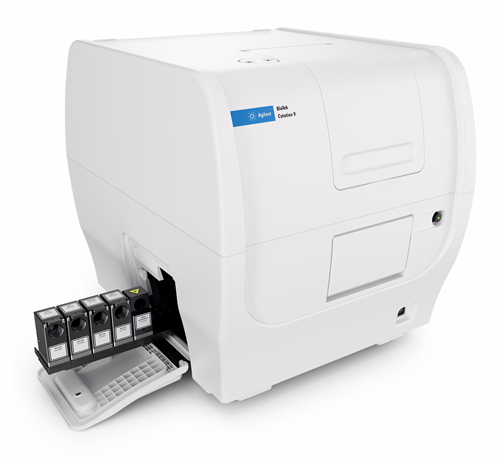
BioTek Cytation Hybrid Multimode Reader

MICROBIOLOGY · GROWTH CURVE ANALYSIS

Agilent BioTek LogPhase 600 Microbiology Reader

A purpose-built absorbance reader engineered specifically for microbial growth curve analysis, delivering precise incubation, shaking, and OD600 measurements for reproducible bacterial and yeast growth studies.


  • Reads up to four standard 96-well microplates simultaneously for efficient multi-plate microbial growth studies.
  • Purpose-built orbital shaking with user-selectable speed keeps cells uniformly suspended throughout long kinetic experiments.
  • Multi-sensor incubation up to 45 °C with ±0.5 °C temperature uniformity minimizes plate-to-plate variation and edge effects.
  • Condensation Control technology creates a top-to-bottom temperature gradient to reduce condensation and improve absorbance accuracy.
  • Dedicated LogPhase software automatically calculates lag time, maximum growth rate (OD/min), and time to stationary phase without requiring Gen5 software.
  • Fast absorbance measurements in under 60 seconds per plate with kinetic intervals as low as 2 minutes 30 seconds across four plates.
  • Optimized exclusively for OD600 microbial growth analysis, providing reliable, reproducible results for microbiology laboratories.
Best For
  • Bacterial growth assays
  • Yeast growth assays
  • Antimicrobial resistance
  • Biofuels research
  • Algal research
  • Food & beverage testing

Ideal for laboratories performing routine microbial growth curve analysis, the LogPhase 600 provides dedicated OD600 performance without the added complexity of fluorescence, luminescence, or imaging capabilities.
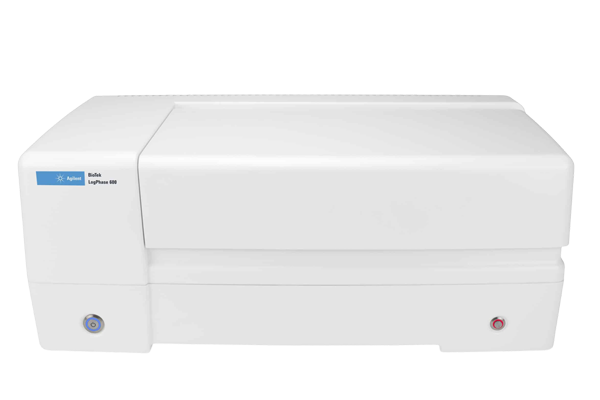
Agilent BioTek LogPhase 600 Microbiology Reader


Which Multimode Reader Is Right for You?

Specification Synergy LX Synergy H1 Synergy Neo2 Cytation LogPhase 600
Detection modes UV-Vis · FL · Lum UV-Vis · FL · Lum UV-Vis · FL · Lum UV-Vis · FL · Lum Absorbance only (dedicated OD600)
Cell imaging - - - Yes, to 60× (Cytation 1/9) -
Optics Filter + monochromator Hybrid (filter + mono) Hybrid, quad monochromators Hybrid (filter + mono) LED + dual photodiode (fixed, 560–640 nm)
Variable bandwidth - 9–50 nm (1 nm) Variable 9–50 nm (1 nm) - Cytation 9 only* -
Ratiometric detection - - Dual PMTs – FP, FRET, TR-FRET, BRET - -
Lasers - - 100 mW 680 nm Alpha + TRF laser 100 mW 680 nm Alpha - Cytation 9 only* -
Reagent injectors - Optional dual Dual-reagent injector compatible* Dual-reagent injector compatible (Cytation 1/9)* -
Environmental control - To 45/70 °C ("M2" configs), CO₂/O₂* To 70 °C, CO₂/O₂ To 45 °C (Cytation 1) / 65 °C (Cytation 9), CO₂/O₂* To 45 °C, orbital shaking, Condensation Control
Microvolume (Take3) Yes (16/48) Yes + Take3 Trio Yes + Take3 Trio Yes* -
Automation - BioStack/automation ready* BioStack Neo BioStack/automation ready (Cytation 1/9)* (4-plate onboard capacity)
Software Gen5 Gen5 Gen5 Gen5 LogPhase app (dedicated, not Gen5)
Choose it for Everyday multimode assays Flexible mid-range with injectors High-throughput & ratiometric Multimode plus imaging Dedicated microbial growth curves


Key Capabilities

What this range of UV-Vis absorbance readers does across every model - with notes on where individual instruments go further.


Multiple detection modes

Multiple detection modes

Hybrid Technology

Hybrid Technology

Variable bandwidth

Variable bandwidth

Live-cell environment

Live-cell environment

Advanced detection

Advanced detection

Modular & automated

Modular & automated


Medispec Scientific Support

Instrument Installation & Validation
Application Training
Workflow Optimization
Preventive Maintenance
AMC Support
AMC Support
Technical Troubleshooting
Assay Consultation
Assay Consultation
AMC Support
AMC Support

Trusted Across Advanced Research Laboratories

Used by leading institutions driving scientific progress across India and globally.

  • Biotech Companies
  • Pharmaceutical Organizations
  • Translational Research Centers
  • Academic Institutes
  • Diagnostics Laboratories
Across Leading Research Areas
  • Oncology
  • Immunology
  • Cardiovascular
  • Cell Therapy
  • Tissue Engineering
  • Regenerative Medicine
  • Drug Testing
  • Organoid Development

Our Hybrid Multimode Microplate Reader (H1MF) from Medispec India Ltd. is working fine, and the service provided has been excellent.

SV

Dr. Shailendra K. Verma

Scientist • Defence R&D Establishment (DRDE), Gwalior
H1MF Hybrid Multimode Microplate Reader (BioTek)

Our Multimode Microplate Reader (H1M) from Medispec India Ltd. is working fine, and the service provided has been excellent.

AK

Dr. Apurba Lal Koner

Assistant Professor, Department of Chemistry • IISER Bhopal
H1M Multimode Microplate Reader (BioTek)

The Synergy H1M Multi-Mode Microplate Reader with Take3 Microvolume Plate and Gen5 software has been running successfully since June 2017. It continues to perform well, and Medispec’s after-sales service has been satisfactory.

VB

Dr. Vikrant M. Bhor

Scientist D • National Institute for Research in Reproductive Health (NIRRH), Mumbai
Synergy H1M Multi-Mode Microplate Reader (BioTek)

We purchased our H1M multi-mode plate reader from Medispec India Ltd. back in 2012, and it’s still in good working condition. We continue to receive good service support from the Medispec team.

PC

Dr. Partha Chakrabarti

Senior Scientist • CSIR-Indian Institute of Chemical Biology, Kolkata
Synergy H1M Multi-Mode Microplate Reader (BioTek)

Our Synergy H1 Multimode Microplate Reader, supplied and installed by Medispec since January 2012, has been functioning satisfactorily, and the service support has also been satisfactory.

VN

Dr. Vikrant Nain

Assistant Professor • School of Biotechnology, Gautam Buddha University
Synergy H1 Multi-Mode Microplate Reader (BioTek)

Our H1MF Multi-Mode Microplate Reader from Medispec India Ltd. is working fine, meeting our fluorescence polarization detection requirements, and the service from Medispec has been excellent.

RC

Prof. Rina Chakrabarti

Aqua Research Lab, Department of Zoology • University of Delhi
Synergy H1MF Multi-Mode Microplate Reader (BioTek)

We’ve been using our Synergy H1M since May 2011, and it continues to work fine. The service support from Medispec has also been consistently good.

DV

Dr. Dhiraj Vyas

CSIR-Indian Institute of Integrative Medicine, Jammu
Synergy H1M Multi-Mode Microplate Reader (BioTek)

Frequently Asked Questions

What is a multimode microplate reader ?

 A multimode microplate reader is an instrument that detects biochemical reactions using multiple detection modes, including absorbance, fluorescence, and luminescence. Advanced systems also support time-resolved fluorescence (TRF), TR-FRET, and AlphaLISA/AlphaScreen assays.

What assays can I run on a multimode microplate reader?

 Multimode readers support a wide range of applications, including fluorescence, luminescence, absorbance, time-resolved fluorescence (TRF), TR-FRET, fluorescence polarization (FP), and AlphaScreen/AlphaLISA assays used in life science and drug discovery research.

What do RFU and RLU mean?

RFU (Relative Fluorescence Units) and RLU (Relative Luminescence Units) are the measurement units for fluorescence and luminescence assays. These values depend on detector sensitivity, excitation intensity, sample volume, and instrument configuration, so they should not be compared across different instruments.

Filter-based vs. monochromator-based readers  –   what’s the difference?

Filter-based optics provide higher sensitivity and rapid wavelength switching for fluorescence, luminescence, FP, and TRF assays. Monochromator-based optics offer flexible wavelength selection across a broad spectral range without changing filters. Hybrid readers combine both technologies for maximum flexibility and performance.

What is a hybrid multimode reader?

A hybrid multimode reader combines independent filter-based and monochromator-based optical systems in a single instrument. This provides both the sensitivity of filters and the flexibility of monochromators, allowing the instrument to support a broader range of applications.

Are monochromator optics less sensitive than filter optics?

In certain applications, monochromator optics may offer slightly lower sensitivity because of their longer optical path. However, variable-bandwidth monochromators can improve sensitivity and specificity for multiplex assays by narrowing the wavelength range to isolate individual targets.

What are the advantages of a laser light source in a multimode reader?

Laser light sources provide a stable, high-intensity beam that is essential for demanding assays such as AlphaScreen, AlphaLISA, HTRF, LanthaScreen, and TR-FRET. They deliver greater excitation efficiency and improved assay sensitivity than conventional flash lamps.

What is bottom reading?

Bottom reading detects fluorescence or luminescence through the bottom of the microplate, making it ideal for live-cell assays where cells are attached to the well surface. This approach maximizes sensitivity for applications such as ATP viability, GFP expression, and  cell migration studies.

Why does extended dynamic range matter?

Extended dynamic range allows both weak and strong signals to be measured accurately within the same experiment, reducing the need for sample dilution or repeated measurements. This is particularly valuable for enzyme kinetics, growth curves, and endpoint assays.

Do multimode readers have shaking to keep cells in suspension?

Yes. Most Agilent BioTek multimode readers include programmable shaking with adjustable  speed and duration. Some models also provide advanced shaking profiles optimized for specific biological applications.

How do I get CO₂ into a plate reader for a live-cell assay?

Agilent BioTek offers an optional gas controller that maintains controlled CO₂ (0–20%) and O₂ (1–19%) levels inside compatible plate readers, enabling live-cell assays such as cell proliferation, oxidative stress, hypoxia, and metabolic activity studies.

What applications require reagent injectors?

Reagent injectors are used for assays that require compounds to be added during measurement or involve rapid reaction kinetics, including calcium flux assays, dual-luciferase assays, ion channel studies, enzyme kinetics, and other real-time cellular assays.

Get the Right Multimode Reader for Your Lab

Medispec India is the authorized channel partner of Agilent laboratory equipment, providing local sales, installation, certification, and service support.